
Moving to a new home is exciting, but it often comes with a lot of waste, extra fuel usage, and unnecessary stress. The good news is that making eco-friendly choices during your move doesn’t have to be complicated or expensive. With a little planning, you can reduce your environmental impact while still enjoying a smooth, efficient relocation. Eco-friendly moving tips are becoming more important as more people look for sustainable ways to relocate without harming the environment or overspending.
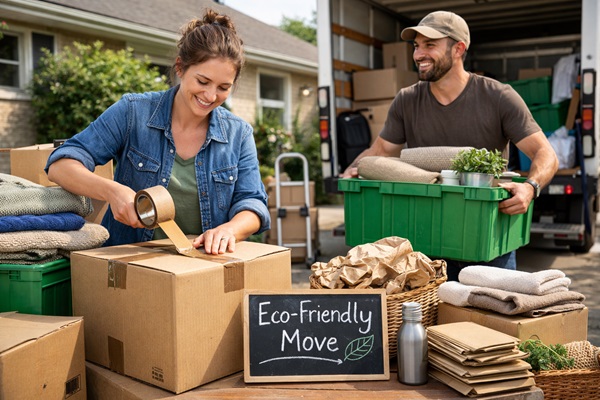
One of the easiest ways to make your move more environmentally friendly is to reduce how much you move in the first place. Many households pack items they no longer use, which adds weight, increases fuel consumption, and raises moving costs. Donating clothes, furniture, and household items to local charities or selling them online helps reduce waste while giving your belongings a second life. This simple step supports sustainable moving practices and makes packing much easier.
Packing supplies are another major source of waste during a move. Instead of buying brand-new cardboard boxes, consider using reusable plastic bins, renting moving boxes, or collecting gently used boxes from local stores. Everyday household items like towels, blankets, and clothing can be used as protective wrapping for fragile items, reducing the need for bubble wrap or foam. These eco-friendly packing ideas not only cut down on waste but can also save money.
Choosing the right moving company also plays a big role in environmentally friendly moving. Many eco-friendly movers now use fuel-efficient trucks, optimized routes, and reusable packing materials to lower their carbon footprint. Comparing green moving companies through trusted platforms like MoverRankings helps you find professionals who prioritize efficiency and sustainability. Hiring reliable movers also reduces the risk of delays, repeat trips, and wasted fuel.
On moving day, small decisions can make a big difference. Consolidating loads, organizing boxes clearly, and planning routes in advance help reduce time on the road. Avoid last-minute supply purchases that often end up unused or discarded. Being prepared allows movers to work efficiently, which benefits both your budget and the environment.
After the move, continue your eco-friendly efforts by reusing or recycling packing materials whenever possible. Boxes can be saved for storage, shared with friends, or donated to others planning a move. Any leftover supplies should be recycled responsibly rather than thrown away. Setting up your new home with energy-efficient lighting and appliances is another great way to extend your commitment to sustainable living beyond moving day.
Eco-friendly moving doesn’t require perfection—just thoughtful choices. By reducing waste, using sustainable packing options, and working with environmentally responsible movers, you can enjoy a smooth relocation while lowering your environmental impact. If you’re looking to make your next move greener, comparing eco-friendly moving companies on MoverRankings is a smart place to start.