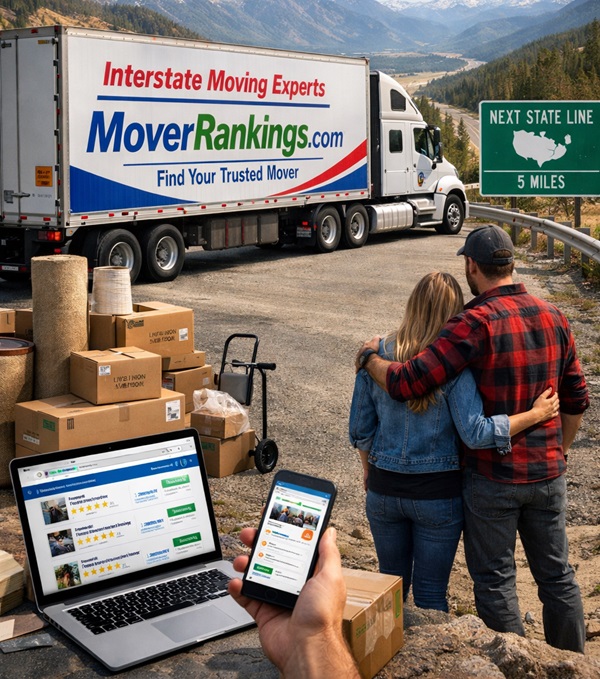
MoverRankings has introduced a new set of updates aimed at helping consumers make smarter, safer decisions when choosing a moving company. As the moving industry continues to grow and evolve, these improvements reflect MoverRankings’ ongoing commitment to accuracy, transparency, and consumer education.
Smarter, More Accurate Moving Company Rankings
The moving company rankings on MoverRankings have been recently updated using the latest available customer feedback and service performance indicators. These rankings are designed to help users quickly identify reliable moving companies based on real-world experiences, professionalism, and overall service quality.
By continuously refreshing ranking data, MoverRankings ensures that consumers are viewing relevant and current information rather than outdated listings. This approach helps highlight movers that consistently deliver quality service while reducing the risk of choosing unreliable or poorly rated companies.
Enhanced Reviews for Greater Transparency
Reviews play a critical role in helping consumers evaluate moving companies, and MoverRankings has improved how reviews are displayed and organized across the website. The updated review experience allows users to more easily understand customer satisfaction, communication quality, pricing clarity, and service reliability.
These enhancements make it easier for visitors to compare movers side by side and spot potential red flags before booking a service. By prioritizing transparency, MoverRankings helps users feel more confident and informed throughout the decision-making process.
Expanded Moving Tips and Educational Content
In addition to rankings and reviews, MoverRankings has expanded its library of moving tips and educational resources. These guides are designed to assist users at every stage of their move, from early planning to moving day and beyond.
New and updated articles cover essential topics such as choosing the right moving company, preparing for local and long-distance moves, understanding moving estimates, and avoiding common moving scams. Practical advice on packing, scheduling, and communicating with movers helps reduce stress and prevent costly mistakes.
MoverRankings remains focused on protecting consumers by providing unbiased information and easy-to-use tools. The platform encourages users to research multiple movers, read reviews carefully, and verify licensing and credentials before making a final decision.
By combining updated rankings, transparent reviews, and helpful moving advice, MoverRankings serves as a trusted resource for homeowners, renters, and businesses navigating the moving process.
The latest updates reflect MoverRankings’ dedication to continuous improvement and user trust. As consumer needs change and the moving industry evolves, the platform will continue to refine its tools, expand its content, and improve data accuracy.
Visitors are encouraged to explore the new updates, compare moving companies, and take advantage of the expanded moving tips to plan a smoother, more confident move.
As the moving industry heads into 2025 and 2026, new rankings and performance reports are revealing which companies are truly standing out—and why. Based on a combination of customer feedback, service innovation, and nationwide performance data, several major movers continue to dominate the conversation, even as the industry navigates a slower housing market.
This year’s rankings highlight familiar industry leaders that have consistently delivered reliable long-distance and interstate moving services. Allied Van Lines, United Van Lines, Atlas Van Lines, and Mayflower remain top performers, especially for full-service and long-distance moves. Their strength lies in extensive national networks, experienced crews, and the ability to manage complex relocations across state lines.
For customers prioritizing affordability and pricing clarity, Mayzlin Relocation and American Van Lines are gaining attention for their flat-rate pricing models. These companies appeal to budget-conscious movers who want upfront costs without surprise fees—a growing demand among consumers wary of fluctuating moving expenses.
Meanwhile, Safeway Moving continues to earn its reputation as a customer favorite. Strong reviews consistently point to responsive communication, accurate estimates, and dependable delivery timelines. In an industry where trust is critical, customer satisfaction is becoming just as important as pricing.
Another standout is Colonial Van Lines, frequently recognized for its investment in crew training and service quality. Their focus on professionally trained teams has helped them build a reputation for careful handling, particularly for fragile, high-value, and specialty items.
Beyond national rankings, state-level awards are becoming increasingly influential. Organizations such as USA Today and Plant-A Insights Group have spotlighted companies like NorthStar Moving and National Van Lines for exceptional in-state performance. These honors are based on customer surveys, service reliability, and regional reputation—factors that matter deeply to customers planning local or intrastate moves.
This shift toward regional recognition reflects a broader industry trend: customers want movers who understand local regulations, logistics, and community-specific challenges, not just national branding.
Across the board, top movers are doubling down on transparency. Flat-rate pricing, GPS shipment tracking, background-checked crews, and detailed contracts are no longer optional—they’re expected. Industry analysts and review platforms such as Move.org, moveBuddha, and Forbes Home consistently point to these features as key differentiators among top-ranked companies.
Technology is also playing a growing role, with real-time tracking and digital inventories helping customers feel more in control during stressful moves.
Despite these positive developments, the moving industry is facing headwinds. Lower home sales in late 2024 and early 2025 have led to a noticeable slowdown in overall moving demand. However, this downturn is pushing companies to compete harder on service quality, pricing transparency, and customer experience.
For consumers, that competition is good news. As the industry adapts, movers that prioritize trust, value, and service excellence are emerging as clear leaders for 2025 and beyond.
Service & Crew Excellence: Colonial Van Lines is recognized for professionally trained crews and careful handling of household and fragile items.
State-Level Standouts: NorthStar Moving and National Van Lines receive recognition for strong in-state performance based on customer feedback and service consistency.
Moving from one home to another is a significant investment of both time and money. As you plan your move, you’ll need to balance the value of your time with your moving budget. For many families, finding ways to save money on a move is crucial. A bit of extra budget flexibility can reduce stress and provide a little more room for conveniences, like ordering in while you settle into your new kitchen.
So, what are the most effective ways to cut costs during a move? With extensive experience assisting thousands of families, we have valuable tips to help you save money while ensuring a smooth and pleasant moving process. Here are our top six money-saving tips for a successful move:
Optimize Your Load for Savings
Moving truck costs are determined by the space and weight of your belongings. By making your load more compact and lightweight, you can reduce moving expenses. This is an ideal chance for a strategic declutter. Clear out old clothes and furniture that you don’t need to take with you and consider disposing of items you plan to replace. Dispose of or donate outdated appliances, furniture, grills, and toys that you intend to upgrade, and then purchase new items once you’re settled into your new home.
Gather Packing Materials:
Purchasing packing materials can unexpectedly drive up moving costs. While boxes and packing paper are essential, you don’t need to buy brand-new moving boxes to pack effectively. Begin collecting boxes and packing materials several months in advance to minimize your expenses when it’s time to pack. Ensure each box you keep is sturdy, undamaged, and free of any residues (such as from produce boxes) that could attract pests. Save newspapers and other large paper items for packing instead of buying packing paper. However, note that newspaper print can transfer onto delicate items like fine china, so wrap those in plain paper to avoid staining.
Identify What to Pack Yourself:
Hiring professional movers to handle packing is often viewed as a luxury or a business expense. To save money on a household move, dedicate time to packing the majority of your belongings yourself. You and your family can efficiently pack clothes, wrap electronics, and organize kitchen items into boxes. For delicate items such as fine china or large instruments that are challenging to pack on your own, consider hiring a local moving company to handle these items.
Use Creative Padding Solutions:
You don’t have to rely solely on paper for packing. A smart way to cut down on weight, bulk, and packing materials is to use items you’re already bringing with you. For example, towels and t-shirts can serve as excellent padding for electronics and other fragile items. Wrap dishes in the folds of a towel to prevent them from shifting, and protect game consoles and controllers by wrapping them in t-shirts to avoid damage during the move. This approach not only saves space in your clothing boxes but also reduces the need for additional packing materials.
Consider Driving Your Vehicle as Part of the Move
Opting to drive your own vehicle can be more cost-effective than having the moving company transport it, and it offers several benefits. By driving yourself, you save on the cost of vehicle transport and can also carry items that won’t fit in the moving truck. Use your car to transport overnight essentials for the family, and consider placing pets and houseplants in the backseat rather than paying for specialized transport services.
Optimize Time Efficiency with Your Movers:
To ensure your move is as efficient as possible, plan ahead in several key ways:
Be Fully Packed: Make sure all your belongings are packed and ready to go before the movers arrive. This allows them to spend all their time loading the truck rather than waiting for you to finish packing.
Prepare the New Home: Ensure the new house is unlocked and ready for unloading when the movers arrive.
Compare Moving Quotes: Avoid companies with unrealistic time estimates that could lead to hidden costs.
Communicate with Movers: Reach out to your moving company ahead of time to discuss strategies and scheduling.
Moving is an exciting milestone, and saving on your move gives you more flexibility to enjoy the experience. Consider holding a garage sale, donating items you don’t need or plan to replace, and packing efficiently. This way, you can enjoy the savings once you’re in your new home. For more tips or to arrange expert moving services, contact us today!
You’ve probably encountered the common belief that moving homes can be an incredibly stressful experience — a journey fraught with unforeseen challenges and chaotic moments that often feel beyond our control.
To add to the already daunting nature of moving, it’s important to recognize that transporting all your belongings from one home to another can also be quite costly. Combine steep moving expenses with the stress of relocating, and you have a challenging combination that demands careful handling. It’s no surprise that everyone is eagerly seeking the most economical way to move across the country.
If you’re moving on a tight budget, you likely understand or anticipate the challenges ahead. However, don’t lose hope. The following 13 cost-effective moving tips, ideas, and tricks are crafted with one goal: to assist you in moving affordably, allowing you to save your hard-earned money whether you’re moving locally or across the country.
1. Manage Your Moving Costs:
Understanding how to move affordably will greatly benefit you when it comes time to settle the moving expenses. However, the key to saving during your move begins with creating a detailed relocation budget.
A personalized moving budget allows you to allocate your funds efficiently among the tasks ahead. It serves as a crucial tool, alerting you to any areas where additional financial resources may be needed. This proactive approach enables better control over your expenditures and allows for adjustments to ensure your initial budget allocation is sufficient.
2. Choose the Optimal Time to Move Out:
Utilize Your Flexibility in Choosing a Moving Date as a Key Cost-Saving Strategy
Taking advantage of flexibility in your moving schedule can be a major tactic for moving affordably. Booking your move well in advance may lead to discounts from your moving company. Opting for a move-out date during the off-peak season (September to May) often results in substantial savings, potentially slashing standard rates by 20-30% or more.
Another tip to save on moving costs is to steer clear of scheduling your move around national holidays, weekends, or the beginning and end of the month.
3. Efficiency Saves Money:
Time is indeed valuable, wouldn’t you say? One of the easiest and most effective cost-saving tips when moving is to strategically organize your time to maximize efficiency. By optimizing your schedule, you can save significant amounts of time. This newfound efficiency allows you to accomplish more tasks or even take well-deserved breaks during the moving process.
Develop a Moving Schedule to Make the Most of Each Day and Ensure You’re Well-Prepared for Moving Day. Regularly refer to your moving checklist to stay on track and efficiently manage your time, ultimately saving money through effective time management.
4. Seek Out the Most Economical Rates:
There are several effective ways to achieve a budget-friendly move, and the most economical approach for long distances involves hiring an affordable cross-country moving service. While it’s known to be challenging, with thorough research and careful planning, it can be done.
Dedicate time to researching reputable long-distance movers, obtaining accurate price estimates from each, meticulously comparing the quotes, and selecting the company that offers the best combination of price and additional services.
5. Minimize Your Cross-Country Cargo:
Of all the tips for moving on a budget, the most effective money-saving advice is crystal clear: only transport items you’ll need in the near future and discard the rest. It’s straightforward—the total weight of your shipment directly influences your moving costs.
If you haven’t used certain items in over a year or have forgotten about them entirely, it doesn’t make sense to pay to move them across the country to your new home. Take the time to declutter, streamline your belongings, and pack only what is essential for you.
6. Turn Your Unwanted Items into Cash by Selling Them:
Understanding how to save money when moving house is beneficial, but knowing how to generate income before moving out is even more advantageous. Consider converting your unwanted belongings into cash—extra funds that can significantly support your successful move.
After deciding what to take with you, organize a yard sale for the items you’re leaving behind. Additionally, sell unnecessary items online through specialized platforms like eBay, Craigslist, or Amazon to maximize your earnings.
Regardless, allocate the earned money toward your moving expenses.
7. Obtain Moving Boxes at No Cost:
It might seem surprising, but one of the largest expenses when packing up your home is purchasing cardboard boxes. The good news is that among all the cost-saving moving tips, finding free moving boxes has been proven effective.
You don’t have to pay for all your cardboard boxes. Obtain gently used boxes from friends who have recently moved or ask local businesses, which often have surplus boxes they are happy to give away for recycling purposes. This simple strategy can lead to substantial savings for your move!
8. Avoid Purchasing Most Packing Materials:
When it comes to saving money, did you know your home is likely stocked with packing materials that can serve as alternatives to those provided by movers? While they may not match the professional quality, they come at no cost to you.
Consider using baskets, buckets, trash cans, suitcases, drawers, and bags as containers for moving, and utilize blankets, bed sheets, towels, socks, and other clothing items for wrapping and cushioning. You can also use newspapers as padding, but be cautious to avoid direct contact with delicate items that have sensitive surfaces.
9. Handle Your Own Packing Whenever Possible:
Whether you’re still searching for the most affordable way to move locally or you’ve already identified the least expensive method for long-distance moves, the packing phase will significantly impact your costs.
If you don’t possess special or valuable items that necessitate professional packing services (such as a piano), consider packing your home with the help of friends. By avoiding the expense of professional packers, you can save a substantial amount of money on your move, whether it’s local or cross-country.
10. Plan a DIY Move:
When moving on a tight budget, it’s crucial to assess your affordable moving options and select the one that will save you the most money. With the average cost of an interstate move hovering around $4,300 and in-state moves averaging $2,300, it’s clear that moving house can be quite costly.
By enlisting the help of family and friends, securing a suitably sized moving vehicle, and limiting the amount of belongings you transport, organizing a DIY move is often the most economical approach for local moves.
11. Consider Your Employment-Related Moving Options:
If you’re relocating across the country for work, your employer might offer financial assistance for your moving expenses. In some cases, they may cover all relocation costs, which is the optimal scenario for job-related moves.
Regardless, when preparing to move, it’s advisable to discuss and potentially negotiate for full or partial reimbursement of your moving expenses with your employer. It’s always worth asking, isn’t it?
12. Check Your Eligibility for Tax Deductions:
If you are moving across the country for a full-time job and your new workplace is less than 50 miles from your new home, you may qualify for tax deductions related to packing, transportation, and storage expenses. This potential financial benefit is valuable, especially when you are seeking the most economical way to move out of state.
Ensure you retain all receipts and relevant documents pertaining to your cross-country move. Once you arrive at your new location, consult with a qualified tax advisor to determine your eligibility for tax deductions.
13. Practice Frugality Immediately After Moving:
Certainly, your primary goal when moving to a new home across the country is to employ effective money-saving tips and tricks to preserve your finances. However, it’s crucial to maintain these efforts even after the move is complete. Otherwise, your efforts to find affordable ways to move could be in vain.
Avoid the urge to splurge on new items for your new home immediately after moving in. The excitement of a successful move may tempt you to overspend. Instead, exercise restraint and wait until you are absolutely certain about the necessity of any purchases you plan to make.
When considering a moving company, it is important to take several factors into account. These factors include the company’s reputation, cost, safety and security provisions, and the quality of their services.
Firstly, it is essential to look at the moving company’s reputation. It is important to find reputable companies that have earned accolades from their customers. Checking customer reviews and gaining insight into the company’s track record is a great way to determine the company’s reliability before hiring.
Secondly, it is important to consider the cost of the move when selecting a mover. It is important to gather quotes from several companies and compare them. Look into each company’s fees and figure out which one offers the best deal per your requirements. Don’t hesitate to ask questions and clarify all costs before the move.
Moving Company factors
Thirdly, safety and security should also be taken into account. The moving company should provide adequate safety and security measures to ensure a secure and stress-free move. Look into whether or not the movers are insured, and determine whether or not the mover provides any liability coverage for damages or losses during the move.
Finally, the quality of services is also important when looking for a moving company. Make sure you research the movers’ capabilities and ask for recommendations. Check out their customer service reviews and get a feel for the level of professionalism they operate with. Pay close attention to any comments or feedback on the quality of their services.By taking all of these factors into account, you can be sure that you are selecting the right moving company for your needs.